Ball
My first word was "ball." Not "mom," not "dad," not "water." Ball. I was lazy to talk, I had no rush to say anything, but I was already obsessed with soccer, and I had a lot of balls around me.

That sounds like a tiny childhood detail, the kind of thing relatives repeat at lunch, but I do not think it is small at all. A first word is not a destiny, of course. But for me the ball was never just a toy. It was my first object of obsession, repetition, competition, coordination, and independence, all of it at once, before I had any of those words.
And while I was lazy to talk, I was in a hurry to walk and to do things myself. I was proud when I could reach the couch on my own to drink my baby bottle without anyone carrying me there. I liked the feeling of executing without waiting for someone to do it for me. That instinct never left.
I played soccer from my early years until I was 12, basically every single day. I also competed in futsal as a goalkeeper, and since I lived two blocks from the beach I played on the sand all the time too. So soccer was not an activity I did sometimes after school. It was the environment I lived in.
Here is the thing about sports: they teach you in a way no lecture ever could. You learn fast that wanting to win is not enough, that the ball does not care about your excuses, that your body matters, that your teammates matter, and that pressure changes how you act whether you like it or not. You learn that losing hurts and is not the end. And you learn that sometimes the best thing you can do is not the beautiful thing, it is the useful one.
I was a goalkeeper, and goalkeepers have a strange relationship with mistakes. A striker can miss ten shots and still become the hero with one goal. A midfielder can give away three bad passes and just disappear back into the rhythm of the game. But when a goalkeeper makes a visible mistake, the punishment is instant: the ball goes in, and everyone saw it. That builds a specific kind of responsibility. When you are the last person before the goal, you cannot hide from reality for very long.
Playing with my father, who was a goalkeeper coach, was tough. He used to throw the ball at my face on purpose so I would not be afraid of it when I competed. It was not fun to get hit in the face, and honestly it still does not sound nice written cleanly on a page. But a lot of things in life are not easy and still teach you something real. The point was never cruelty, it was preparation. If fear made me turn my face away at the wrong moment, the ball would go in. Once I learned that getting hit was survivable, I could stay in the play.
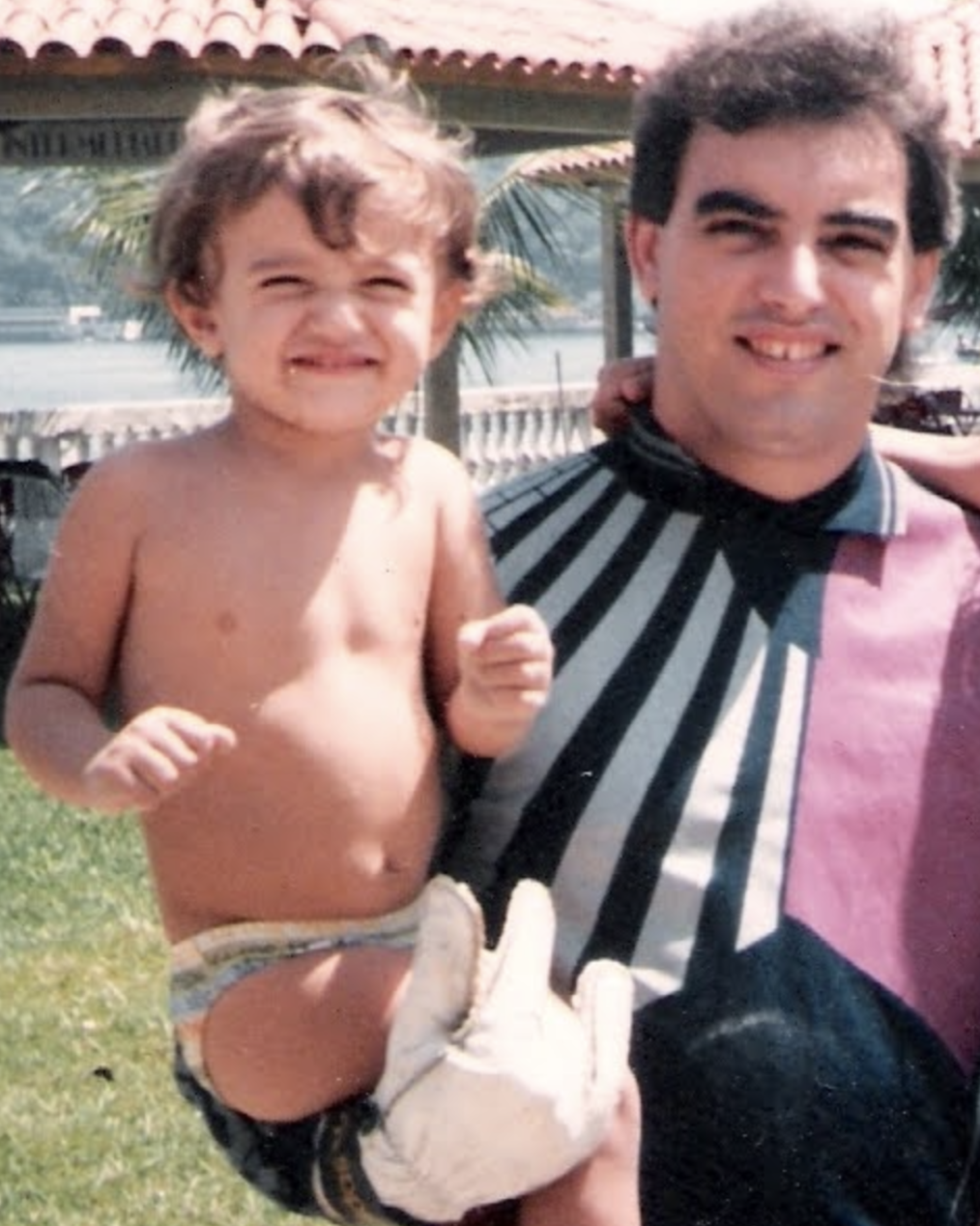
He killed my fear on purpose, and he had a phrase for it that I still carry: the fear of losing takes away the will to win. Think about that. If you are busy protecting your face, you are not playing the game, you are just trying not to get hurt, and a player who is only trying not to get hurt has already given up the goal. My father did not want me afraid of the ball because a goalkeeper afraid of the ball is already beaten before the shot comes. The same man also told me, again and again, to be the best. Not to be okay, not to participate, to be the best. That fed something in me that never turned off, this constant pull to compete and to win.
And that lesson keeps coming back in adult life. A hard customer conversation is a ball coming at your face. A medical diagnosis is a ball coming at your face. A business risk is a ball coming at your face. A missed deadline, a painful negotiation, a team conflict, a financial decision, a personal loss, all of them are testing the same thing: do you turn away, or do you stay present?
Now, do not read this as me telling you to go look for pain. I am not. I do not believe suffering automatically makes people better, some suffering only damages, some pressure only breaks. But I do believe a person needs enough contact with reality to stop being fragile.
For me soccer was always serious. Tournaments, competition, the score on the board, my father in my ear telling me to be the best. It was never a hobby, it was a place where I went to win. Later I came to love tennis, after soccer, and tennis was the opposite, it was always just for fun. Nobody threw a ball at my face on a tennis court. I never needed to win a match to feel okay about myself, I played because I liked playing. I think I needed both, the serious thing that taught me to compete and the light thing that taught me a ball can also be just a ball.
And here is the part I am honest about because I still do not understand it. I stopped playing futsal at the turn of a year, after about two years as the substitute goalkeeper, right when I was about to become the main keeper. The spot I had been working toward was basically mine, and I walked away from it. To this day I do not know why I stopped. Maybe it was tennis pulling me the other way, the fun thing winning over the serious one. Maybe I was just tired of training since I was around three or four years old, which is a long time to do anything before you are even a teenager. I do not have a clean answer, and I am not going to invent one to make the story tidy. Sometimes you leave something you loved and the reason never fully arrives.
The ball taught me execution. Do the thing. Move. Decide. React. Try again.
The team taught me interdependence. You can be independent and still need other people. You can own your role without pretending the game is only about you.
Competition taught me feedback. The score is not the whole truth, but it is not nothing either. Results matter because they reveal something: sometimes skill, sometimes preparation, sometimes luck, sometimes that your strategy was just wrong.
The beach taught me adaptation. Sand changes how the ball moves, wind changes the game, uneven ground changes your balance. You do not get to demand perfect conditions before you play.
Looking back, the ball was probably my first mental model before I had any idea what a mental model was. It told me:
- Do not wait forever before acting.
- Reality gives feedback.
- Your body is part of your performance.
- Teams matter.
- Fear gets smaller when you face it enough times.
- The fear of losing takes away the will to win.
- Losing is information, not identity.
- The game continues.
That is why this chapter sits here, near the beginning. Before the companies, before the code, before the frameworks and repositories and investments, there was a ball. And with it, one simple lesson I still carry: life gets a lot easier to understand the moment you are willing to enter the game.